
Consortium
eRECOVER Coordinator
MiNDNET E-Health AG coordinates the eRECOVER project and is responsible for overall project management, scientific coordination, governance, and reporting to the funding body. The coordinator ensures alignment across all work packages and oversees compliance with ethical, legal, and regulatory requirements throughout the project.

Prof. Dr. Anne Karow (M.D.)
Chief Medical Officer and Executive Management at MiNDNET E-Health AG
Prof. Dr Anne Karow (M.D.) is specialist in psychiatry and psychotherapy. During her more than two decades of medical and academic work as a Professor of Psychiatry and Psychotherapy at the University Medical Centre Hamburg-Eppendorf, Anne Karow has implemented, scientifically evaluated and clinically managed innovative health care models for people with mental disorders. These include the fields of adolescent psychiatry and early detection and intervention, integrated care models such as the Hamburg Model of assertive community treatment and the RECOVER Model for stepped care including the eRECOVER digital platform, and the development of digital diagnostics and therapies in her role as medical director and Chairwoman of the Board of Directors of MiNDNET e-Health AG and GmbH.
Her academic work has received numerous awards; she is the author of more than 200 academic publications and has an h-index of 46.
MiNDNET is a medical device manufacturer, the developer of the DiGA ORIKO ADHD therapy and covers the entire development pathway from the therapeutic concepts and scientific evaluation to regulatory approval of all MDR-compliant processes for DiGAs in Germany. Together with MiNDNET and different partners, Anne Karow is also working on the development and implementation of e-health models and treatment approaches across multiple countries in Europe.

Dr. ANDREAS SPROCK
Technical Project Manager and CEO MiNDNET E-Health AG
Dr. sc. ETH Andreas Sprock is an experienced digital health and technology executive with a strong entrepreneurial track record at the intersection of healthcare, fintech, and innovation.
As CEO of MiNDNET E-Health AG, he is responsible for company development, regulatory strategy, and the successful execution of digital health products, including the development and BfArM approval of the DiGA ORIKO.
With a background in theoretical computer science (ETH Zurich) and a deep understanding of digital ecosystems and business models, Andreas Sprock combines technological expertise with strategic leadership. His work focuses on translating complex technological capabilities into scalable, market-ready solutions within highly regulated environments.
Prior to MiNDNET, Andreas Sprock held senior leadership roles at SIX Group, including Head of Group Innovation and Head of Innovation Management, where he led large-scale innovation initiatives across the organization. He was responsible for multi-million innovation budgets, managed interdisciplinary teams, and drove strategic foresight processes, startup collaborations, and the development of new digital business models in financial services and payment ecosystems.
Earlier in his career, he was Co-Founder of milliPay Systems AG, a micropayment startup, where he held multiple executive roles including CEO, CPO, and Head of Sales. He played a key role in building the company from the ground up, developing product and go-to-market strategies, leading product development, and establishing sustainable business models in the digital payments space.
At MiNDNET, Andreas Sprock brings together his entrepreneurial mindset, technical depth, and extensive experience in innovation management to drive the development of digital therapeutics and e-health platforms. His work spans product strategy, regulatory compliance (including MDR and ISO standards), and the scaling of digital healthcare solutions within the German DiGA framework and beyond.
In addition, Andreas Sprock is actively engaged in international collaborations and innovation ecosystems, including his role as a start-up coach at the F10 accelerator, supporting the development of emerging ventures at the interface of technology and healthcare.

DEJAN JURIC
CHIEF PRODUCT OFFICER and Executive Management at MiNDNET E-Health AG
Dejan Juric is Chief Product Officer and a member of the Executive Management at MiNDNET E-Health AG, where he is responsible for product strategy, software architecture, and the end-to-end development of regulated digital health products.
He oversees the technical design and implementation of MiNDNET’s product portfolio, including the DiGA ORIKO for ADHD therapy. His work spans the full development lifecycle from therapeutic concept design and platform architecture to MDR-compliant deployment, operating within the regulatory frameworks of ISO 13485, IEC 62304, and the German DiGA pathway.
Within the eRECOVER project, Dejan Juric leads the product development of the shared digital mental health platform, ensuring that clinical requirements, user experience insights, and regulatory standards are translated into a scalable, secure, and interoperable technical infrastructure.
Dejan Juric holds a Master of Science and a Bachelor of Science in Computer Science from ETH Zurich. Before joining MiNDNET, he built an extensive career at the intersection of technology, product leadership, and financial services. In senior leadership roles at Banxware, SIX Group, and TWINT, he defined and launched market-shaping products across embedded lending, mobile payments, and open banking. At Banxware, he led the development of embedded lending solutions for digital platforms across Europe. At TWINT and SIX Payment Services, he was instrumental in bringing mobile payments to market in Switzerland and establishing the country’s first standardised open banking API platform. Earlier, he worked as a management consultant at The Boston Consulting Group and co-founded multiple technology ventures, including the mobile payment startup Klimpr. He also served as a guest lecturer on Disruptive Business Models at the Frankfurt School of Finance & Management.

Prof. Dr. Martin LAMBERT
BOARD OF DIRECTOS at MiNDNET E-Health AG
eRECOVER Partners
The eRECOVER consortium brings together academic institutions, clinical partners, and digital health experts from multiple European countries. Each partner contributes defined expertise across clinical care, research, platform development, evaluation, and dissemination. Together, the consortium covers all core domains required for the development, implementation, and evaluation of a shared digital infrastructure for integrated mental health care. Consortium partners include:
Centre de Recherche en Santé Mentale et Psychiatrie (CRSMP)
Assistance Publique – Hôpitaux de Marseille / Aix-Marseille Université
France
CEReSS — Health Services Research and Quality of Life Center
Aix-Marseille University / Assistance Publique – Hôpitaux de Marseille (APHM), France
CEReSS is a Health Services Research unit affiliated with Aix-Marseille University and APHM, one of the largest university hospital systems in France. The unit specialises in measuring and improving patient and caregiver experience through Patient-Reported Outcomes (PROMs), Patient-Reported Experience Measures (PREMs), and real-world data infrastructures. CEReSS directs the national digital mental health platform MonPsy&Moi and coordinates national and European research programmes in mental health, including Horizon Europe projects. With more than €20 million in competitive funding over the last five years, CEReSS combines psychometric expertise, large-scale health data infrastructures, and a proven track record of translating research into health policy and clinical practice.
Psynovia — Centre for Mental Health and Psychiatry Research PACA
Marseille, France
Psynovia is a regional research and innovation centre dedicated to mental health in the Provence-Alpes-Côte d’Azur region. It serves as an interface between academic research, clinical practice, and health policy, facilitating the implementation of evidence-based mental health interventions in real-world settings. Psynovia brings expertise in stakeholder engagement, regional health system integration, and translational research, supporting the deployment and sustainability of digital mental health solutions in the French healthcare context.
Psynovia / CEReSS are lead partners for WP4 and WP5 · Co-lead WP1 · Contributor WP2, WP3, WP6.
WP4 — Real-World Implementation and Evaluation: Psynovia/CEReSS leads the real-world implementation study in France. Responsibilities include overall coordination of the cross-country methodology and analysis, design of the study protocol, French ethical submission, patient recruitment in French primary and community care settings, clinical data collection, assessment of feasibility, acceptability, clinical effectiveness, and preliminary health economic evaluation of the eRECOVER platform. CEReSS contributes its expertise in PROMs/PREMs integration, health services research methodology, and large-scale real-world data analysis.
WP5 — Stakeholder Preferences and System Readiness: Psynovia/CEReSS leads the societal acceptance and policy feasibility assessment for France. This includes designing and conducting large-scale population surveys using Discrete Choice Experiments (DCE), Willingness-to-Use (WTU), and Willingness-to-Pay (WTP) analyses. A Delphi process will engage French policymakers, insurers, and patient associations to define national reimbursement pathways and integration strategies for digital mental health interventions.
WP1 — Project Management / Ethics / Regulatory: Psynovia/CEReSS co-leads ethics coordination and regulatory compliance, serving as co-contact point for ethical aspects alongside FH Campus Wien. Responsibilities include continuous monitoring of ethical, legal, and social aspects and compliance with French national ethics and data protection requirements.
WP2, WP3, WP6: Contribution to user requirements analysis, clinical expertise and national adaptation of platform content, and communication and dissemination activities.

Prof. Raymund Schwan, MD, PhD
Principal Investigator
Raymund Schwan is Professor of Psychiatry and Psychotherapy at the University of Lorraine in Nancy, France. He previously served as Clinical Director of the University Psychiatry Department at the Centre Psychothérapique de Nancy. He chairs the expert committee for the “Grand Défi Numérique en Santé Mentale” at the French Ministry of Health. He is currently a visiting researcher at CEReSS in Marseille.
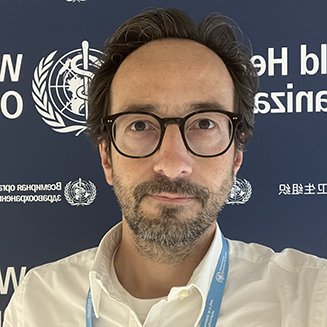
Prof. Laurent Boyer, MD, PhD
Co-Principal Investigator
Laurent Boyer is Professor of Public Health and Epidemiology at Aix-Marseille University and Director of CEReSS and of the Hospital Data Warehouse at APHM. He specialises in Health Services Research, with a focus on patient-reported outcomes (PROMs/PREMs), real-world evidence, and the integration of large-scale health data infrastructures. He has published over 500 peer-reviewed articles (H-index: 70) and holds more than €20 million in competitive funding as Principal Investigator, including two Horizon Europe THCS projects. He is a collaborator of the Global Burden of Disease Network (IHME/University of Washington) and co-investigator on international projects with Johns Hopkins University, Harvard T.H. Chan School of Public Health, and the University of Calgary.
University of Zurich (UZH)
Switzerland
The University of Zurich (UZH), founded in 1833, is Switzerland’s largest university and a leader in medical research. With its Faculty of Medicine, UZH is at the forefront of advancing healthcare, offering innovative research and education in areas like clinical medicine, biomedicine, and public health. The university’s medical research focuses on developing new treatments and improving healthcare systems, with a strong emphasis on translational medicine. UZH is home to several renowned research institutes, collaborating closely with hospitals and international organizations. Its expertise in medical science and research makes UZH an important partner in the eRECOVER project, which aims to advance sustainable resource recovery methods.
The University of Zürich (UZH) is involved in Work Package 4 (WP4) of the eRECOVER project, which focuses on real-world implementation and clinical evaluation of the digital mental health platform across primary and community care settings in Switzerland. The goal is to assess the feasibility, acceptability, clinical effectiveness, and budget impact of the platform, ensuring it is integrated smoothly into everyday healthcare practices. Through mixed-methods observational studies, data will be collected via patient-reported outcomes, interviews, and health system data. The findings from WP4 will inform implementation strategies and guide the scalable adoption of the platform across diverse healthcare systems.

Prof. Dr. med. Erich Seifritz
Project Coordination
Prof. Dr. Erich Seifritz is a renowned psychiatrist and researcher at the Psychiatric University Hospital Zurich (USZH). He specializes in adult psychiatry, psychotherapy, and neurobiology, with a particular focus on the intersection of mental health and neuroscience. Prof. Seifritz has extensive experience in clinical research, particularly in the areas of depression, anxiety, and neuroimaging. He has contributed to numerous publications on psychiatric disorders and is involved in advancing therapeutic interventions. As a key member of the eRECOVER project, Prof. Seifritz brings his expertise in mental health care and clinical implementation to the development of digital mental health solutions.

Dr. med. Marius Knorr
Deputy project coordinator
Dr. Marius Knorr is a senior psychiatrist at the Psychiatric University Hospital Zurich. He has many years of clinical leadership experience in adult psychiatry and specialized care models. He leads the hospital’s Home Treatment program as well as the Consultation and Liaison Service, focusing on integrated and patient-centered psychiatric care. In addition, Dr. Knorr is responsible for the platform im Quadro, a large outpatient center offering highly specialized services and a day care clinic. His work emphasizes cross-sectoral care, innovative treatment structures, and the translation of clinical expertise into routine practice.

Dario Rumenovic
Postgraduate, assistant
University of Applied Sciences (UAS), Campus Vienna
Research Center Digital Health and Care (FHCW)
Austria
HCW’s applied research on technologies focuses on user needs and measurable benefits in digital healthcare. The centre brings together expertise in engineering, health and care into an interdisciplinary hub accessible to academia and industry. By combining rigorous methods with practical applications, HCW develops clinically relevant digital solutions that support healthcare professionals, patients, and clients. This work examines innovative digital solutions in terms of acceptance, usability, and impact in real-world prevention and clinical settings.
Building on the centre’s expertise in the growing field of digital mental health solutions, HCW promotes their safe, effective, and sustainable integration into everyday practice. The centre emphasizes user and stakeholder involvement, user-centred design, and iterative evaluation to generate high-quality evidence and ensure practical relevance.
HCW in Austria plays a key role in making eRECOVER user-friendly and ready for real-world use. As lead partner for User Experience and Requirements (WP2), HCW coordinates and conducts interviews, focus groups, and stakeholder workshops in Austria and Germany, and develops user-experience (UX) methods and materials applied across all study sites in France, Switzerland, and Spain. Working closely with patients, healthcare professionals, and decision-makers, these insights directly inform the design of an accessible, practical, and clinically relevant platform.
In WP3 (Content and Technical Development), HCW contributes expertise through iterative developmental and heuristic evaluations in Austria, as well as cross-country testing to support software development. HCW also contributes methodologically and scientifically to real-world evaluation (WP4) and to dissemination and sustainability planning (WP6). Overall, HCW strengthens stakeholder and user involvement, usability, user experience and the platform’s potential for sustainable impact in routine care.
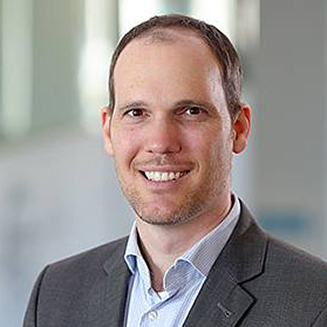
FH-Prof. Dipl.-Ing. Mag. Dr. techn. Franz Werner
Project Coordination & LeadershiP Communication
Oversees overall project steering at the UAS Campus Vienna, internal coordination, and communication with external stakeholders and decision-makers.
CV:
- Head of Degree Program; Head of Research Center Digital Health and Care, University of Applied Sciences Campus Vienna (present)
- Responsible for the management of teaching activities and research in the field of health and care technologies

Ing. Mag. Dr. scient. med. Bernhard Meyer
Project Management & Clinical Expertise
Leads work packages in Vienna, ensuring stakeholder acceptance, scientific rigor, and real-world relevance of this digital mental health innovation within EU healthcare settings.
CV:
- Senior Researcher, Digital Health & Care, University of Applied Sciences Campus Vienna (2025–present)
- University Lecturer in Statistics and Neuroscience, Medical University of Vienna (2014–present)
- Clinical & Health Psychologist and Clinical Neuroscientist with expertise in digital mental health, computational data science and stepped care treatment models
- PhD and Postdoctoral research in neuroimaging, genetics, and cognition in psychiatric disorders
- Project lead, data science, and consultant in digital health innovation, including Austria’s first Digital Health Application (DIGA, German law)

Carina Hauser, Bakk. rer. soc. oec. MA
Qualitative Methods & UX
Leads UX work packages, prepares and moderates workshops (needs assessment, user acceptance) and systematically translates findings into product requirements, ensuring user-centred design throughout the development cycle.
CV:
- Senior Researcher, Research Center Digital Health and Care, UAS Campus Vienna (present)
- Sociologist and PhD-Student Social Sciences with focus on Psychology and expertise in digital mental health
- UX-Researcher with expertise in conducting user needs and evaluation of digital tools
- Project Lead PsyGes – Development and evaluation of an information and counselling app for parents of children with mental health issues

Dipl.-Ing.in Mag.a Dr.in techn. Susanne Hensely-Schinkinger
Qualitative Methods & UX
Supports UX methodology preparation and conducts interviews during WP2, contributing to user-focused requirements and design insights.
CV:
- Senior Researcher, Digital Health & Care, UAS Campus Vienna (Mar 2024–present)
- User Research Manager, cogvis software & consulting (Aug 2021–Mar 2024), user-centered concept development and evaluation studies in long-term care.
- PhD (Dr. techn.), TU Wien (2013–2020) – research on supporting informal caregivers, bridging problem understanding with digital support concepts and interventions.
- Interdisciplinary background in Medical Informatics (BSc/MSc) and Nursing Science (Diploma) with strong expertise in UX/user research, ethnographic methods, and evidence-based evaluation of digital tools in care contexts.
- Project lead & contributor in digital health/care innovation, incl. leading NEST – New Everyday Supportive Technology (since Aug 2024) and participation in projects such as Linked Care (continuity of information in mobile care).

Dr. scient. med. Mojca Hriberšek
Digital Health & Implementation Research
Mojca Hriberšek is a researcher in digital health with a focus on user-centred development, implementation research, and healthcare innovation. Within eRECOVER, she focuses particularly on integrating healthcare professionals’ and patients’ perspectives into the development and implementation of the digital solution.
CV:
- Senior Researcher, Digital Health & Care, University of Applied Sciences Campus Vienna (2026–present)
- PhD (Dr. scient. med) at MedUni Wien – Digital Communication Tools in the Hospital Setting (2021-present)
- Researcher at the Ludwig Boltzmann Institute Digital Health and Patient Safety (2021–2026)
- Experience in user-centred design, Design Thinking, prototyping, and digital health innovation
- Innovation experience at Siemens Healthineers, FAU Digital Tech Academy, and ZOLLHOF International research experience in Austria, Germany, Australia, and Slovenia
IBIMA/FIMABIS
Spain
The Biomedical Research Institute and Platform in Nanomedicine (IBIMA Plataforma BIONAND) is a multidisciplinary research space in biomedicine and nanomedicine that is centred around the two largest hospitals in Malaga (Regional and Virgen de la Victoria University Hospitals) and Primary Care Units of the Andalusian Public Health System, together with the biotechnological groups of the University of Malaga (UMA). This entity brings together 90 research groups, selected based on scientific excellence, and working on eight big research areas. IBIMA aims to promote research of excellence, oriented towards translational research, fostering transferable results to clinical practice, advancing in the improvement of prevention, diagnosis and treatment of the most prevalent health problems at the regional, national and international level. It enables the development and promotion of a space for cutting-edge research that contributes to the scientific basis of the programs and policies of the National Health System.
The Spanish partner, the Biomedical Research Institute of Málaga (IBIMA), contributes to the real-world implementation of the eRECOVER project in Spain. IBIMA supports the deployment and evaluation of the digital mental health platform in primary and community care settings, contributing to patient and site recruitment, data collection, and the assessment of clinical effectiveness, feasibility, and user acceptance. Furthermore, IBIMA contributes to the clinical and cultural adaptation of the platform to the Spanish healthcare system, supports usability and implementation studies, and participates in dissemination and sustainability activities aimed at facilitating long-term integration into routine care.

Dr. Patricia Moreno-Peral
Principal Investigator
Dr. Patricia Moreno-Peral is an Associate Professor at the University of Málaga and a Senior Researcher at the Biomedical Research Institute of Málaga (IBIMA), where she is co-lead of the Mental Health and Primary Care Research Group.
She is a clinical psychologist with solid experience in mental health research in primary care and digital mental health interventions. Her research focuses on the prevention and treatment of common mental disorders, patient-centred care, and the evaluation of psychological interventions.
She has authored more than 80 peer-reviewed scientific publications and has participated in several national and international research projects.

Dr. Sonia Conejo-Cerón
TEAM MEMBER
Dr. Sonia Conejo-Cerón is a postdoctoral researcher at the Biomedical Research Institute of Málaga (IBIMA), a member of the Research Network on Chronicity, Primary Care and Health Promotion (RICAPPS), and a university lecturer at the Spanish National Distance Education University (UNED).
She is a clinical psychologist, and her research focuses on the prevention and treatment of common mental disorders, such as depression and anxiety, with an increasing emphasis on preventive interventions for adolescents and young adults.
She is the author of approximately 50 peer-reviewed scientific publications and has participated in multiple internationally and nationally funded research projects.

Dr. María Flores López
Team member
Dr. Flores holds a PhD in Psychology from the University of Málaga (2024, cum laude with International Mention) and has a strong research trajectory in mental health.
She has been awarded highly competitive excellence-based research contracts, including a PFIS predoctoral fellowship funded by the Carlos III Health Institute (ISCIII) and a Junior Postdoctoral Contract from the Andalusian Regional Government.
She has co-authored 26 scientific publications, 11 as first author, as well as two book chapters. She has participated in seven nationally competitive research projects and has served as principal investigator in two of them.
Her career has been further strengthened by international research stays supported by prestigious mobility grants (ISCIII, IBIMA–BIONAND, and EMBO), with a sustained focus on the identification of novel therapeutic targets in mental health.
eRECOVER Colaborators
University Medical Center Hamburg-Eppendorf (UKE)
Department of Psychiatry and Psychotherapy
Germany
The University Medical Center Hamburg-Eppendorf (UKE) is one of Germany’s leading academic medical centers and a pioneer in digital health, combining high-quality patient care, research, and education within a fully digitalized clinical environment. Its Department of Psychiatry and Psychotherapy is among the largest and most comprehensive psychiatric institutions in Europe, providing integrated inpatient, day-care, and outpatient services, with a strong focus on early detection, severe mental illness, and innovative, network-based care models.
Within the eRECOVER project, UKE participates as a collaborating institution under the leadership of Prof. Martin Lambert. The department contributes its expertise in integrated care, digital mental health, and real-world service delivery, supporting governance as well as ethical and regulatory frameworks, and contributing to the development, clinical evaluation, and implementation of digital diagnostics and therapeutics across care settings.
In close collaboration, Dr. Candelaria Mahlke and the participatory research group EmPeeRie (Empower Peers to Research) contribute to the project’s Responsible Research and Innovation (RRI) approach, ensuring strong involvement of service users and stakeholders throughout all phases of development and implementation. Further details on EmPeeRie are presented separately on this website.
Associated Partners
In addition to the funded consortium partners, eRECOVER collaborates with a range of associated partners, including healthcare providers, regional care networks, patient and peer organisations, and other relevant stakeholders.
Associated partners contribute practical expertise, stakeholder perspectives, and implementation support. They are not beneficiaries of project funding and do not hold formal responsibilities within the project governance structure. Their involvement strengthens the real-world relevance of the project and supports dissemination, stakeholder engagement, and future scalability.